

Bounce Dash Sprint
Review
Bounce Dash Sprint targets players who prefer timing-based racing over twitch reflexes. The hopping mechanic rewards a steady rhythm, and losing balance slows progress rather than ending the race, which keeps mistakes from feeling harsh. Short races and AI opponents make repeated attempts easy, while online matches with friends add a social layer. The family-friendly visuals and simple controls suit casual sessions, though players seeking deep customization or long races may find the scope limited.
Full story
Rhythm Over Raw Speed
Bounce Dash Sprint builds its races around a hopping rhythm rather than a sprint button. Each forward press makes the character leap inside the sack, and directional inputs keep that leap on course. Losing balance slows progress, so the fastest players are usually the ones who find a repeatable pace instead of mashing forward. The result is a skill-based challenge that feels fair and responsive because mistakes cost momentum, not the race.
Sunny Field Day Atmosphere
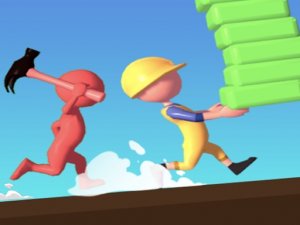
The game uses bright colors, smooth animations, and playful character designs that match its lighthearted theme. Backgrounds resemble outdoor field-day settings, which keeps the mood welcoming whether you are watching or playing. That visual approach supports the casual tone without adding complex rules or mature themes, making each short race easy to read at a glance.
[IMG_1]Racing Against AI and Friends
Every race includes several computer-controlled opponents, so positions shift and every placement matters. Online matches with friends add a social layer, and because each race is short, repeated attempts to improve placement feel natural. No two races unfold exactly the same way, which keeps the multiplayer component fresh without requiring long sessions.
Learning the Hop
New players can start racing immediately thanks to straightforward controls. Mastering the hopping technique takes practice, though. Repeated play develops a sense of timing and balance that directly translates to better performance. Observing how opponents handle tricky sections can also provide useful insights, and the game encourages gradual improvement without punishing mistakes harshly.
Compatibility
FAQ
Reader Comments
Sign in to comment
You must be logged in before posting a review or rating.
No comments yet. Be the first to comment!








Editorial Notes