
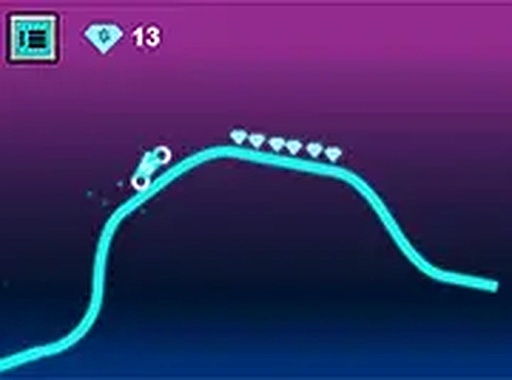
Photon Speedway Rider
Review
Photon Speedway Rider delivers a focused arcade racing experience that prioritizes precision over raw speed. The track designs gradually introduce complexity, keeping the gameplay engaging without becoming frustrating. Coin placement encourages strategic path selection, adding a layer of decision-making to each run. The browser-based format works flawlessly on both desktop and mobile, making it easy to pick up for a few minutes. While it lacks multiplayer features, the solo progression offers enough variety to hold attention. The neon aesthetic is visually appealing without being distracting, and the controls remain responsive across all platforms. This is a solid choice for anyone looking for a quick, skill-based racing game.
Full story
Circuit Design and Atmosphere
Each track in Photon Speedway Rider presents a distinct layout with glowing edges and reflective surfaces. The neon aesthetic creates a sense of speed as the environment blurs past. Courses include straightaways for acceleration and tight corners that demand careful steering. Barriers appear at unpredictable points, requiring constant attention. The visual style reinforces the high-energy feel without overwhelming the player.
Bike Selection and Handling
Players choose from several motorcycle models, each distinguished by its color and glow pattern. The controls respond quickly to input, allowing for precise lane changes and obstacle avoidance. Acceleration is consistent, but maintaining control through turns becomes the primary challenge. The handling model rewards smooth steering over abrupt movements, making each race feel responsive and fair.
Coin Collection and Scoring
Coins are placed along the track in patterns that encourage risk-taking. Gathering them adds to the final score, but chasing every coin may lead to collisions. The scoring system balances speed with collection efficiency. Players who memorize coin locations can plan optimal routes. This layer of strategy elevates the experience beyond simple obstacle dodging.
Progression and Difficulty
As players advance, new track layouts introduce tighter corridors and more frequent barriers. Early levels serve as a tutorial for basic movement, while later stages test reflexes and track memorization. The difficulty curve feels natural, giving players time to adapt before each new challenge. There is no penalty for restarting, which encourages experimentation with different approaches.
Platform and Accessibility
The game runs entirely in a web browser, eliminating the need for downloads or updates. Touch controls are optimized for mobile devices, with on-screen buttons that adjust to screen size. Keyboard controls work well on desktop. Full-screen mode is available for an uninterrupted view. This flexibility makes the game suitable for quick sessions during breaks or longer play periods at home.









Reader Comments
Sign in to comment
You must be logged in before posting a review or rating.
No account? Create one
No comments yet. Be the first to comment!